

Now Reading: Elon Musk’s Policy Influence Could Impact HBCU Funding
-
01
Elon Musk’s Policy Influence Could Impact HBCU Funding


In recent months, Elon Musk has increasingly leveraged his substantial influence to impact public discourse and government policy. With his outspoken positions on educational spending, diversity initiatives, and governmental efficiency, Musk’s advocacy could inadvertently have profound implications for Historically Black Colleges and Universities (HBCUs), institutions that historically rely heavily on federal funding.
The HBCU Funding Landscape
HBCUs, including renowned institutions such as Howard University, Alabama State University, and Spelman College, significantly depend on federal funding through programs like Pell Grants, Title III initiatives, and research grants. Currently, over 70% of students attending HBCUs benefit directly from these critical financial support systems, which aim to provide equitable educational opportunities for historically underrepresented populations.
However, ongoing policy debates around federal budget cuts, largely influenced by prominent voices advocating for streamlined government spending and reductions in diversity-focused initiatives, could jeopardize these funding streams. Elon Musk, known for his robust public commentary and advocacy for leaner governmental programs, could potentially influence political and public sentiment in ways that directly or indirectly result in reduced federal support for education and diversity, equity, and inclusion (DEI) programs.
Musk’s Influence in the Public Sphere
Elon Musk’s viewpoints reach millions through platforms such as X (formerly Twitter), podcasts, and media appearances, making him a prominent figure in shaping policy dialogues. His criticisms of DEI efforts as “woke” excesses and calls for more fiscally conservative policies resonate strongly with segments of political and business communities, potentially amplifying efforts to reduce funding for programs that benefit HBCUs.
While Musk himself has not explicitly targeted HBCU funding, his influence could indirectly bolster policymakers and advocacy groups already pushing for significant budget cuts and the reduction or elimination of programs critical to these institutions. Any substantial reductions in Pell Grants or Title III funding—both frequently scrutinized by fiscal conservatives—would disproportionately impact HBCUs, whose student bodies are heavily dependent upon such financial aid and support programs.
Risks and Real Consequences
The potential fallout from policy shifts driven by Musk-inspired sentiment is substantial. Reductions in federal funding would threaten HBCUs’ ability to provide essential academic programs, scholarships, retention and tutoring programs, and even threaten critical hiring initiatives that attract and retain Black faculty.
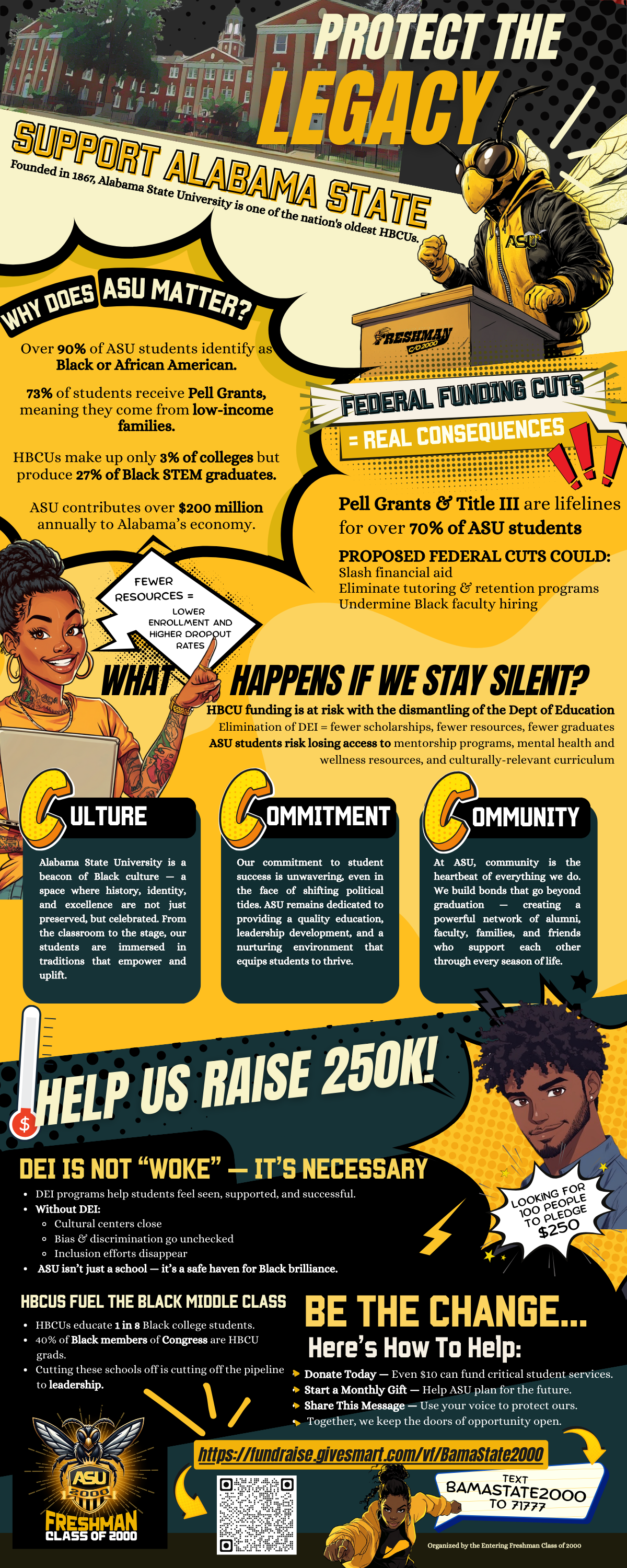
A recent campaign by Alabama State University’s Entering Class of 2000 vividly highlights these concerns. The campaign underscores the real-world risks of reduced funding: fewer financial resources directly translate into increased dropout rates, reduced access to culturally relevant curricula, diminished community resources, and fewer career opportunities for students.
Community Responses and the Path Forward
In response to these threats, HBCU communities and supporters have actively engaged in advocacy efforts emphasizing the crucial role these institutions play. Campaigns like ASU’s “Protect the Legacy” clearly illustrate the significant cultural, economic, and educational contributions that HBCUs provide not just to Black communities but to American society as a whole.
The call to action is clear: HBCUs must build robust networks of support to counteract potential negative impacts. Through grassroots fundraising, alumni engagement, and political advocacy, institutions and communities can proactively mitigate risks posed by policy changes influenced by powerful public figures like Elon Musk.










- Advantage Sample 1
- Disadvantage Sample 1
Related Posts

Stay Informed With the Latest & Most Important News
Previous Post
Next Post







Advertisement